
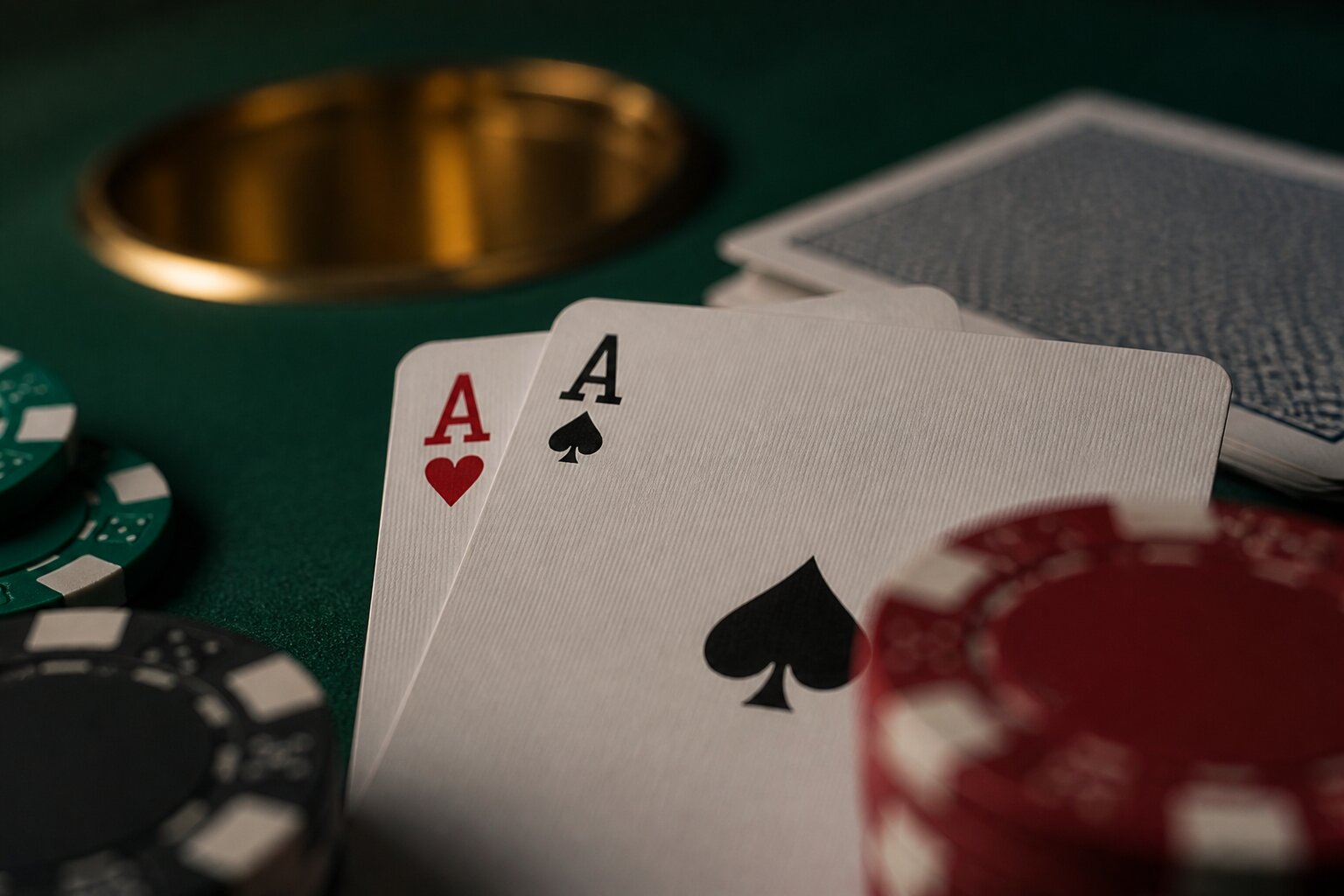
Ever sat at a blackjack table, dealt an ace, and felt your confidence rise? The ace is a special card: it can be worth 1 or 11, and that flexibility is what makes it so important in the game. But that choice also creates decisions to make, especially if you find yourself staring at two aces.
Understanding how aces work—and what to do with a pair—can change how you play a round, from cautious choices to more aggressive positions. Let’s walk through the value of an ace, what two aces mean, and how different rules affect play, so you feel ready for whatever the next hand brings.
Understanding the Value of an Ace in Blackjack
An ace in blackjack can count as either 1 or 11, whichever suits the hand. That dual value is the core reason the ace is so useful: it lets a hand be “soft hands” (meaning an ace can switch between values), which reduces the immediate risk of busting when you take another card.
For example, an ace and a seven is shown as 8 or 18. If a five is drawn next, the ace automatically becomes 1 to keep the total at 13 instead of pushing over 21. This automatic adjustment happens every time an ace would otherwise create a bust, so soft hands give more freedom to take a calculated risk.
Because the ace can form a blackjack when paired with any ten-value card, it also creates the strongest possible starting hand. Even when it doesn’t make blackjack, the ability to toggle between 1 and 11 shapes the decisions that follow and affects how aggressively the hand can be played. With that flexibility explained, it helps to see what a pair of aces looks like in practice and why splitting is usually the chosen route.
What Happens When You Are Dealt Two Aces?
Being dealt two aces is uncommon but strategically significant. Since counting both as 11 would give a total of 22—an invalid hand—the usual course is to split them into two separate hands. Splitting places a second bet equal to the original stake and treats each ace as the first card of a new hand.
After splitting, the dealer deals one additional card to each ace. Typically, no further hits are allowed on those hands, so each split ace ends up with just one extra card. That means an ace followed by a king counts as a 21, not a blackjack, and will usually pay even money rather than the premium jackpot payout reserved for an original two-card blackjack.
Splitting gives two chances to win from one deal, but it also means two bets at risk; outcomes vary and there’s no guarantee of a stronger result. Keep bets within comfortable limits when choosing to split, and be aware of the table rules before committing. Next, we’ll look at why the ace holds such sway over strategy even beyond splitting.
Why Is the Ace So Important in Blackjack?
The ace’s importance comes from its versatility and the strategic options it creates. Its ability to be 1 or 11 lets a player approach draws and stands differently than with fixed-value cards, and that flexibility underpins many basic strategy choices.
Beyond soft hands, the ace’s greatest single advantage is the potential to make a blackjack with a ten-value card. That two-card 21 beats most dealer outcomes and often commands a higher payout. Even when a blackjack isn’t achieved, the ace makes hands more forgiving: a soft 16 (ace and five) can absorb a hit that would bust a hard 16, so players can pursue improvement with reduced downside.
This strategic value is why splitting aces is so common and why players pay close attention to situations where an ace faces the dealer’s upcard. That brings us on to how split aces and ace rules can differ across game variants, which can affect the best choice in play.
How Is a Hand with Two Aces Played?
When two aces appear, play proceeds by separating them and treating them as individual hands, with each receiving a single extra card. Because both aces cannot be 11 at the same time, splitting avoids the impossible total of 22 and gives two fresh opportunities to reach a strong total.
Since most tables restrict further hits after the one extra card, the quality of those single-card results becomes decisive. One split hand might turn into a 20 while the other is a low total; both outcomes are possible on a single deal. The rule that a split ace plus a ten-value card counts as 21 rather than blackjack affects expected returns, so players should factor that into their decisions.
Splitting aces is therefore less about guaranteeing a win and more about creating better prospects from an awkward starting point. Understanding how different tables treat split aces helps next when comparing rules in various blackjack versions.
Aces in Common Blackjack Variations
The ace’s numerical value never changes across blackjack variants, but how split aces are handled and whether re-splitting or different payouts apply can vary between games. These rule differences alter the risk and reward of splitting and should shape your basic strategy and table choice. Being familiar with the specific house rules where you play helps you manage expectations and adapt your decisions accordingly.
Are Ace Rules Different in European Blackjack?
European blackjack often keeps the common restriction of allowing only one extra card per split ace. It also usually treats any 21 formed from a split ace and a ten-value card as a standard 21, paid at even money rather than as a blackjack with a higher payout. Re-splitting aces is typically not permitted, and surrender after splitting is rarely offered.
Those limitations mean splitting aces is still a sound play in the right situations, but the expected return from split outcomes is slightly lower than in games that allow more flexible play after a split. If you move between casinos or online sites, checking this rule can change which hands you treat as worth splitting and which you do not.
Do Live Dealer Games Treat Aces Differently?
Live dealer tables generally mirror the base game variant they advertise, so most will require only one card for each split ace and will not allow re-splitting. The key practical difference with live play is the time pressure and the human element. Decisions must be made within a set window, and there is little opportunity to revisit choices once a round has started.
Because of that, it is particularly useful to know the table’s split rules before you take a seat at a live game. That way you can play confidently and avoid making hurried decisions based on an incorrect assumption about how aces are handled. Live games can feel more immersive, but the core strategic considerations around split aces remain tied to the specific house rules.
Having covered common variations, a few frequent questions tend to come up about aces and splitting—let us address those so you can finish the article confident in how aces behave.
Frequently Asked Questions About Blackjack Aces
Aces bring questions about splitting, dealer upcards, and re-splits. Clear answers help reduce hesitation at the table and clarify when particular rules change your expectations.
Can You Split Aces More Than Once?
Most tables do not allow re-splitting aces. If a split ace is dealt another ace, it will usually remain a two-card hand rather than being split again. A small minority of games permit re-splitting; those exceptions are always stated in the table rules and can improve the value of splitting when they’re present.
What If the Dealer Has an Ace?
A dealer showing an ace represents a potentially strong position because they might complete a high total. Some games offer an insurance side bet against the dealer having blackjack when their upcard is an ace, but that bet typically favours the house over the long run. If the dealer checks and reveals blackjack, standard outcomes follow according to the table’s payout rules.
If you want to check different tables, look for the specific split and payout rules that affect aces so you can compare how attractive splitting is at each option. Play within limits that suit you, and you’ll be better placed to make the best choice when aces appear.
Play Online Casino Games at New Online Slots
We welcome you to enjoy the thrill of online casino games with us, where having a go is simply about fun and entertainment in a friendly environment. Our aim is to provide a space where you can enjoy yourself at your own pace.
Getting started is straightforward: just create an account, make a deposit and you can start playing when you are ready. We look forward to having you with us at New Online Slots.
**The information provided in this blog is intended for educational purposes and should not be construed as betting advice or a guarantee of success. Always gamble responsibly.