
Ever wondered why some cards in a deck have faces on them, while others just show numbers and symbols? Face cards are among the most recognisable—and often misunderstood—cards you’ll come across, whether you’re playing poker, blackjack, or a simple game of snap.
Understanding what face cards are and how they’re used can deepen your appreciation of many games. From their artwork to the ways games treat them, these cards play distinctive roles that are worth knowing.
Ready to find out what makes a card a “face card” and why they matter at the table? Let’s take a closer look.
What Qualifies as a Face Card?
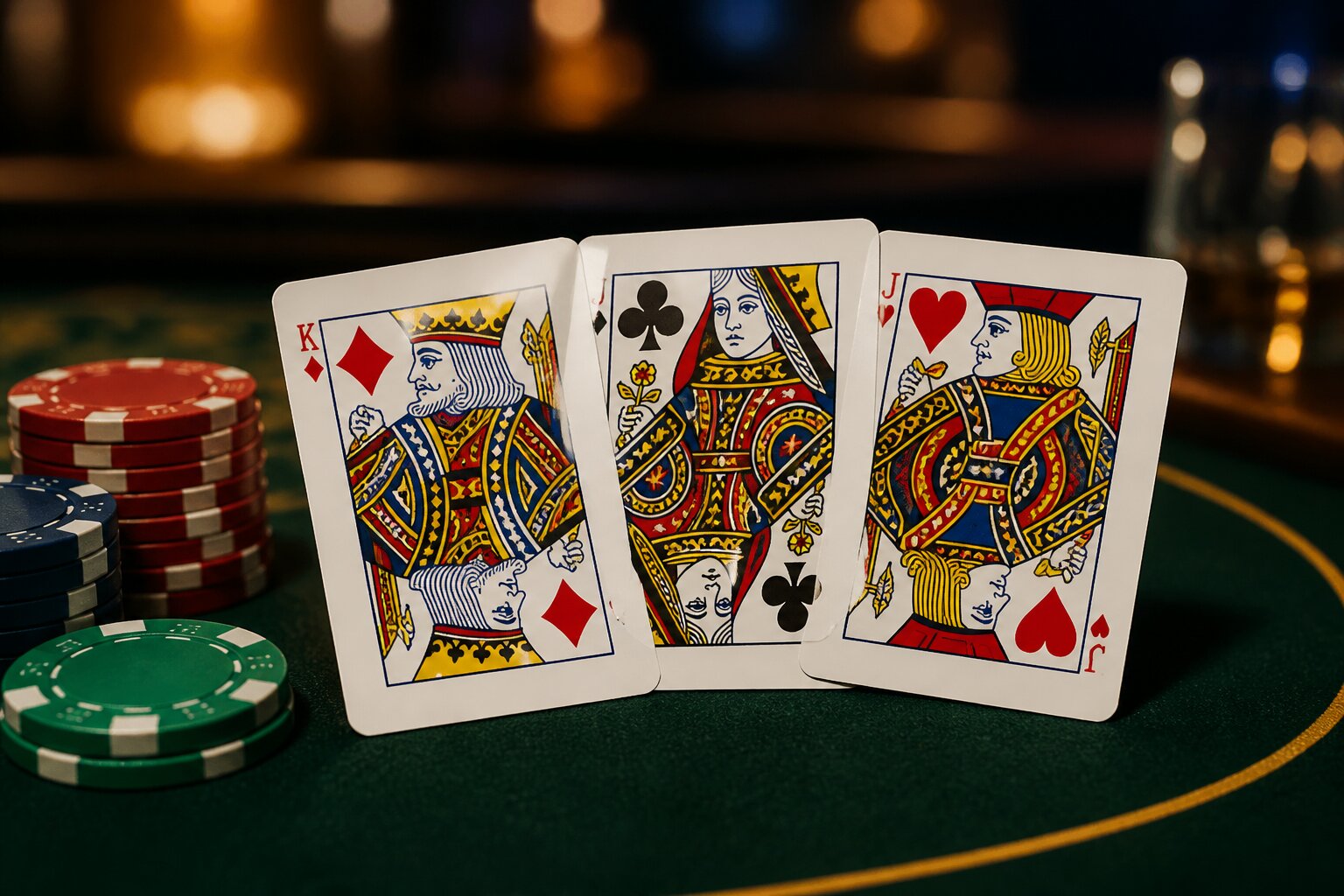
A face card is any playing card that features a picture of a person rather than just a number or symbol. In a standard 52-card deck, the King, Queen and Jack in each suit—hearts, diamonds, spades and clubs—are the face cards.
That gives twelve face cards in total: three per suit. The King is shown as a male monarch, the Queen as a female monarch, and the Jack usually appears as a young courtier or servant. These portraits and their ornate artwork make face cards easy to spot and give them a strong visual identity in any deck.
How Many Face Cards Are in a Deck?
There are 12 face cards in a traditional 52‑card deck. Each of the four suits contains a King, Queen and Jack, so 3 face cards per suit multiplied by 4 suits equals 12.
The three face cards in each suit are:
- King
- Queen
- Jack
This fixed number makes it simple to reason about hands and probabilities in many games, because you can rely on that consistent composition when you compare hands or discuss the deck’s make up. Note that this refers to a standard 52‑card deck and does not include jokers or any non‑standard cards that some games may add.
Why Are They Called Face Cards?
The name is straightforward: these cards display faces, portraits of people, rather than just pips or numerals. Over centuries the images on Kings, Queens and Jacks moved from varied regional artwork and courtly iconography to the more standardised portraits most decks use today.
Much of that standardisation came about as certain national styles became widely copied. French designs, for example, influenced the look of playing cards used across Europe and later in the English-speaking world. Printers and manufacturers further regularised the portraits to make mass production easier.
Those portraits carry visual cues that signal rank and character. Common examples include:
- crowns
- robes
- swords
Grouping Kings, Queens and Jacks under the single term "face card" makes them easy to refer to in rules, strategy and everyday conversation. In many games they share common properties, such as particular point values or roles in trick-taking, which is why a single, recognisable name is useful.
Understanding the Design and Symbols of Face Cards
Face card design draws on a long visual tradition. The figures are typically dressed in what looks like royal or courtly clothing and often hold items—swords, flowers, sceptres—that hint at rank or role. While the imagery doesn’t change how a card functions in play, it contributes to the deck’s identity and helps players read hands quickly.
Different manufacturers and regions sometimes vary small details: facial expressions, costume patterns or the angle of a sceptre. These variations are cosmetic rather than functional, but they can be interesting for collectors and anyone curious about the history behind familiar decks.
If you enjoy design details, looking at older decks or speciality sets reveals how styles shifted across centuries and cultures, showing the connections between playing cards and broader artistic trends.
What Is the Significance of Face Cards in Different Card Games?
Face cards carry specific values or roles depending on the game. In blackjack, for instance, all face cards count as ten points, which affects how players aim for certain totals. In poker, face cards can make up high-ranking hands—pairs, two pairs, three of a kind, straights and royal flushes—so they often contribute to stronger combinations. In rummy and bridge, face cards are typically ranked above numbered cards and can influence scoring and trick-taking.
Because each game defines card values differently, the importance of face cards changes with context. Knowing how a particular game treats Kings, Queens and Jacks helps you judge the strength of a hand and the best way to play it.
Common Myths and Misconceptions About Face Cards
A few misunderstandings crop up at card tables. One is the mistaken idea that face cards show up more or less often than other cards in a properly shuffled deck—every card is equally represented. Another is the belief that face cards somehow give a player an edge beyond the rules of the game; their impact always comes from the game’s scoring or ranking system, not from anything intrinsic to the card.
Some players try to spot patterns in prior draws to predict future cards, but in a well-shuffled deck each deal is independent of earlier ones. If stakes are involved, follow the site or venue’s rules and play within local regulations to keep play fair and safe.
Face Cards in Popular Culture and Symbolism
Face cards have moved beyond the card table into wider culture, appearing in literature, film, art and everyday language. Their striking portraits make them useful symbols for authors, directors and designers.
In Literature and Film
Writers and filmmakers use face cards to represent authority, character or conflict. For example, the Queen of Hearts in Alice’s Adventures in Wonderland is a vivid literary use of a face card figure that conveys power and temperament within a story.
Symbolism and Art
Artists and designers turn to face cards for their recognisable imagery. The cards’ portraits and motifs can be recomposed to explore themes of identity, status and narrative, which is why they turn up in prints, posters and fashion pieces.
Everyday Language
Terms derived from card play have entered common speech. Expressions that reference cards often suggest a tactical advantage or a standout quality, drawing on the cultural weight these figures have acquired over time.
Face cards now serve as visual shorthand across many creative fields, thanks to their long history and immediate recognisability.
This overview should help you spot face cards, understand their roles in different games, and appreciate why these illustrated figures have stayed relevant both at the table and beyond.
**The information provided in this blog is intended for educational purposes and should not be construed as betting advice or a guarantee of success. Always gamble responsibly.