
Ever had a slot machine freeze just as you hit the spin button? Or seen a strange error message pop up mid-game? You’re not alone. Slot malfunctions are rare, but they can be confusing and upsetting—especially if a win seems to be involved.
If you’ve ever wondered what actually happens when slots go wrong and how operators respond, this article explains the common faults, how they’re detected and fixed, and what protections are in place for players. Read on to get a clear picture of the procedures that keep play fair and reliable.
What Is Considered A Slot Machine Malfunction?
A slot malfunction is any technical error that prevents the game from operating correctly. This covers a range of faults that affect play, the accuracy of outcomes and the presentation of results.
Common examples include:
- software problems such as freezing, incorrect result displays, corrupted graphics or calculation errors;
- hardware faults like stuck reels, unresponsive buttons, faulty touchscreens or lights that do not behave as intended;
- connectivity issues that interrupt play, cause delayed information, or prevent outcomes from being recorded or verified.
The UK Gambling Commission requires all licensed operators to ensure their games function correctly and fairly. When an outcome cannot be verified or the device behaves abnormally, the incident is treated as a malfunction and must be handled under formal procedures designed to safeguard players and the integrity of the game.
Those procedures typically include:
- immediately suspending the affected game or device to prevent further play where appropriate;
- investigating and recording the fault, including technical diagnostics and collection of logs or evidence;
- voiding or cancelling any bets or spins where the outcome is not reliable, and providing refunds or compensatory actions where rules require;
- notifying players and relevant authorities if the malfunction has significant impact, and keeping accurate records for audit and review;
- implementing repairs, software patches or other corrective measures before returning the game to service, with follow up checks to ensure the issue is resolved.
Common Types Of Slot Machine Faults
Slot machines are complex systems, so faults can show up in different ways. The most frequent types are:
- Reel malfunctions: reels that fail to spin, stop unpredictably, or show incorrect positions.
- Payout and crediting errors: wrong win amounts appearing, wins not credited, or balance display mistakes.
- Button or touchscreen issues: inputs that do not register or register incorrectly.
- Display problems: frozen screens, garbled images, or incorrect result screens.
- Connectivity failures: server interruptions or lost connections in online games that cause sessions to reset.
Each fault has different implications for players and for the steps operators take to investigate and resolve the issue.
How Do Casinos Detect And Respond To Malfunctions?
Modern machines and online games are built with monitoring features that flag unusual behaviour automatically—such as impossible result combinations, repeated freezes, or communication dropouts. Floor staff and customer support also watch for player reports and visible signs of trouble.
When an issue is flagged, the operator records the incident, isolates the affected device or game and involves technical teams for diagnosis. For physical machines, this may mean taking the unit out of play and running diagnostic checks; for online titles, it might involve server logs and developer tools. The priority is to stabilise the system, preserve any relevant data for review, and prevent further play until the matter is resolved.
These checks are part of the regulatory framework that requires operators to document faults, correct them, and ensure equipment is fit for purpose before it returns to service.
What Happens If You Win During A Slot Machine Fault?
When a win appears during a malfunction, determining whether that outcome is valid becomes the central concern. Terms and industry rules typically state that results influenced by a technical error may be void. Where an outcome cannot be verified as correct, the operator will treat the win as affected by the fault.
In such cases, the usual approach is to reverse or refund bets placed during the incident rather than honour payouts that might stem from an unreliable process. This maintains fairness for all players while investigations establish what happened. Operators must also document the decision and the evidence that led to it.
Do Players Still Get Paid If There’s A Malfunction?
Payment after a malfunction depends on whether the outcome can be verified and on the operator’s published terms, applied in line with regulatory expectations. If an investigation shows the fault changed the result, the operator will not normally pay the win; instead, affected bets are refunded.
Where a malfunction is found, common outcomes include:
- cancellation of the affected game or bet and refunding stakes,
- withholding payment of any affected winnings where the result cannot be verified,
- adjusting records to reflect the correct outcome where that can be reliably determined.
Players who dispute a decision should use the operator’s complaints procedure in the first instance. If the operator cannot resolve the matter to the player’s satisfaction, there are independent review options available, such as referral to an independent adjudicator where applicable.
The emphasis throughout is on transparency. Operators are expected to:
- explain the reason for any cancellation, adjustment or refund,
- keep clear records of investigations and decisions,
- communicate timescales and outcomes to players.
If you are unsure about an operator’s stance, check their published terms and complaints process, and keep copies of any communications and transaction records to support a dispute.
Who Regulates Slot Machine Faults In The UK?
The UK Gambling Commission oversees technical standards and compliance for slot games. It sets the framework within which licensed operators must design, test and run their products to ensure fairness and safety for players.
Licensed operators must meet the Commission’s requirements for:
- testing game software and hardware,
- monitoring live games for irregularities,
- reporting faults and incidents promptly to the regulator.
Regular audits and independent testing ensure games are checked by third parties and that operators keep effective records of performance and faults. The Commission can also require corrective action, demand improvements to systems, and, where appropriate, take enforcement steps against operators who do not follow the rules.
This regulatory oversight establishes consistent expectations for operators, so players can rely on formal processes when faults occur. It also provides transparency about how faults are handled and what steps players can expect if something goes wrong.
Can Malfunctions Affect Your Winnings Legally?
Yes. From a legal standpoint, wins tied to a verified malfunction are typically not considered valid under operator terms and regulatory guidance. The underlying principle is fairness: the outcome must be produced by a reliable, verifiable process. If a fault compromises that process, cancelling the payout and refunding bets is the usual remedy.
Operators must follow regulatory rules and their own published terms when dealing with faults. Decisions are normally documented, including the reason for the cancellation, the evidence relied on, and any corrective action taken. Customers should be able to request details of the decision and make a complaint if they disagree.
If you dispute a decision, there are usually formal channels to follow: start with the operator’s customer support, then escalate via their complaints process, and if unresolved you may refer the matter to the relevant independent adjudicator or regulator, where applicable. Timescales and available remedies vary between operators and regulators, so check the operator’s rules and the regulator’s guidance.
Myth-Busting: Are Slot Malfunctions Exploitable?
There’s a misconception that faults can be used to gain an advantage. Systems are designed to detect irregularities, and any wins linked to a malfunction are generally invalidated.
Attempting to exploit a fault can lead to:
- account restrictions or closure,
- forfeiture of funds and cancelled winnings,
- further action under the operator’s terms, which may include reporting to regulators.
Operators also maintain technical safeguards and audit logs to deter and investigate abuse, and they are expected to act transparently and proportionately when incidents occur.
How Are Malfunctioning Slot Machines Fixed?
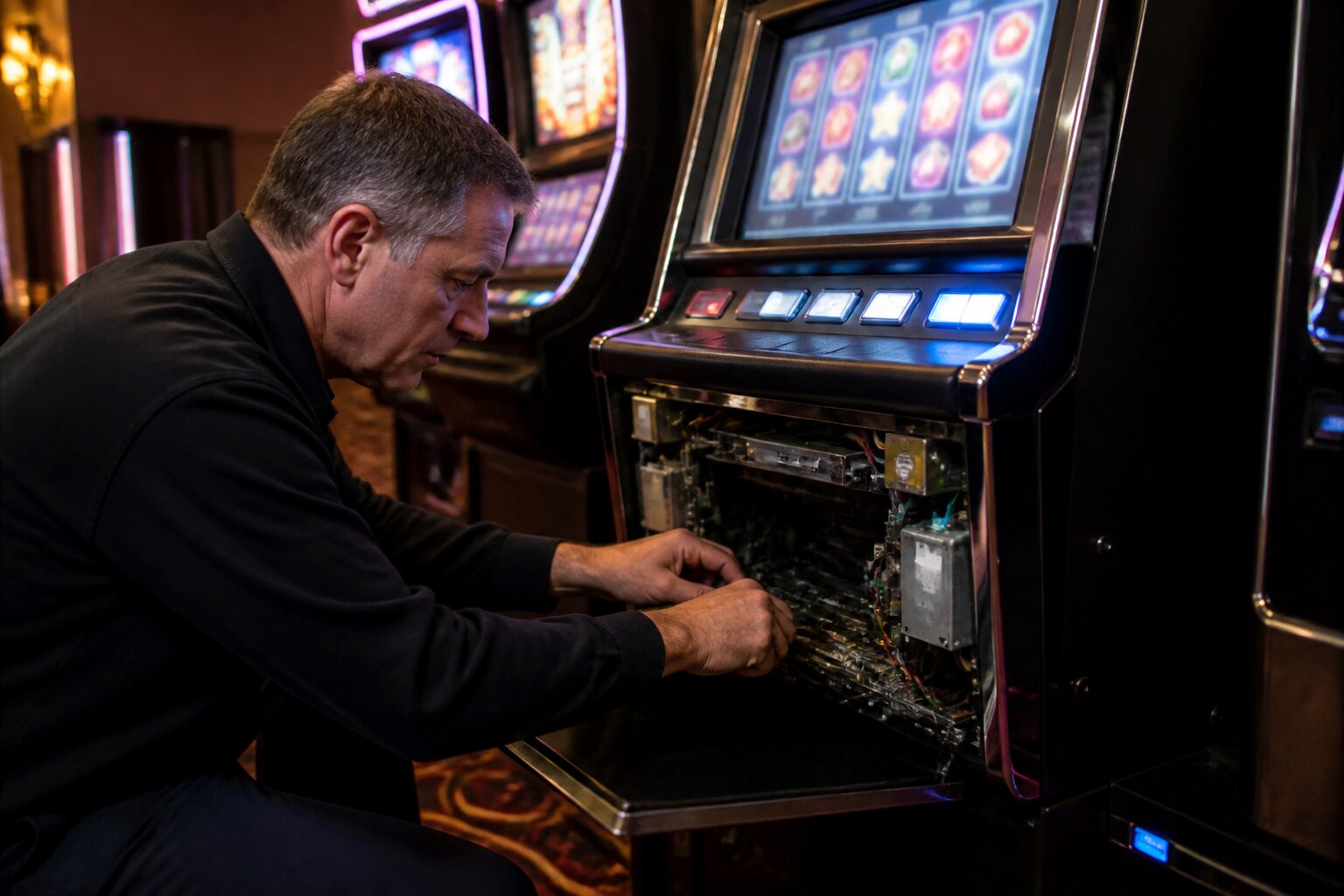
When a fault is found, operators remove the affected machine or suspend the game session until technicians can assess it. Machines are taken out of service promptly and access may be restricted to prevent further play. Records are kept of the fault, the time taken out of service and any players affected.
For physical cabinets, repair work may include:
- replacing worn or failed components such as buttons, reels or power supplies,
- recalibrating mechanical and electronic mechanisms to ensure correct operation,
- updating firmware and software to the latest approved versions.
For online titles, developers and technical teams follow a similar structured process. They usually:
- analyse server and client logs to identify the root cause,
- apply targeted patches to resolve software errors,
- roll back to a previously stable version if a patch is unsafe or unclear,
- keep detailed change logs and version control records.
All repair activity is documented and, where appropriate, reported to regulators or independent testing bodies. This helps maintain transparency and supports any later investigations.
Before returning a machine or game to play, operators perform verification tests to confirm the issue is resolved and the system meets technical standards. These tests often include simulated play sessions, payout accuracy checks and stability testing under load. Where necessary, independent testing laboratories may be used to provide an external certification of fitness.
This careful approach reduces the chance of recurrence and protects both operators and players. It also ensures compliance with licensing requirements and helps safeguard player funds and trust.
What Should You Do If You Suspect A Fault?
If you notice a game behaving abnormally, stop playing immediately and inform the operator so the issue can be logged and investigated. Reporting it promptly helps preserve the game state and any relevant records, which makes later review more straightforward.
When you report the problem, provide as much clear information as you can. Useful details include:
- the time and date when the fault occurred
- the game name and version or round identifier
- a concise description of what happened
- any screenshots or recordings you made
- the stake and balance information at the time, if applicable
Keep copies of your communications with the operator and any other evidence you have. Clear documentation and a factual account of what happened will help make the case easier to assess and speed up any investigation.
If you are unhappy with the operator’s response, first use their formal complaints process. If the outcome remains unsatisfactory, you can seek independent review through the relevant dispute resolution body or regulator, such as the Gambling Commission for UK customers, where appropriate.
Remember to act calmly and stick to the facts when reporting or complaining. This approach helps all parties investigate the issue fairly and efficiently.
Key Takeaways For Players
Understanding how malfunctions are handled helps set expectations and protect your interests:
Slot Malfunctions Are Taken Seriously
Operators must monitor games, record faults and repair them using qualified staff. Formal procedures and testing ensure devices are safe and accurate before returning to play.
Wins During Faults May Not Count
If an outcome is affected by a fault, the operator may void the win and refund affected bets. Decisions are made based on evidence and operator terms.
Regulation Protects Players
Regulatory rules require transparent reporting, testing and resolution procedures. Complaints can be escalated and independently reviewed when necessary.
Stay alert to anything unusual while you play and report problems promptly; doing so helps maintain a fair environment for everyone and ensures issues are dealt with properly.
**The information provided in this blog is intended for educational purposes and should not be construed as betting advice or a guarantee of success. Always gamble responsibly.