
Poker is full of terms that make the game easier to talk about and to think through. One you’ll hear a lot in Texas Hold’em is “overcard.” Knowing what it means and how it affects your play helps you read situations more clearly and make better decisions at the table.
This guide explains overcards, shows common examples, and explores how they influence betting and probabilities. Read on to learn how to spot overcards and use that information without overvaluing them.
What Is an Overcard in Poker?
An overcard is any card in your hand that ranks higher than every card currently on the community board. For example, if the flop is 9-7-3 and you hold a Queen, the Queen is an overcard because it ranks above the highest card on the board.
You can have a single overcard or two overcards. If both of your hole cards are higher than the board, they are both overcards, which generally increases the chance that one of them will pair on later streets. An overcard does not mean you already have a made hand; it merely points to potential improvement.
Overcards matter on later streets as well. When a turn or river appears, a new overcard might be created or lost depending on the new community card. Tracking whether you hold overcards helps you assess how the hand might develop and what possibilities remain.
The term simply describes the relationship between your private cards and the shared cards. It is a neutral piece of information that players use alongside other factors such as position, stack sizes and opponent actions to judge the situation.
How Do Overcards Affect Your Hand Strength?
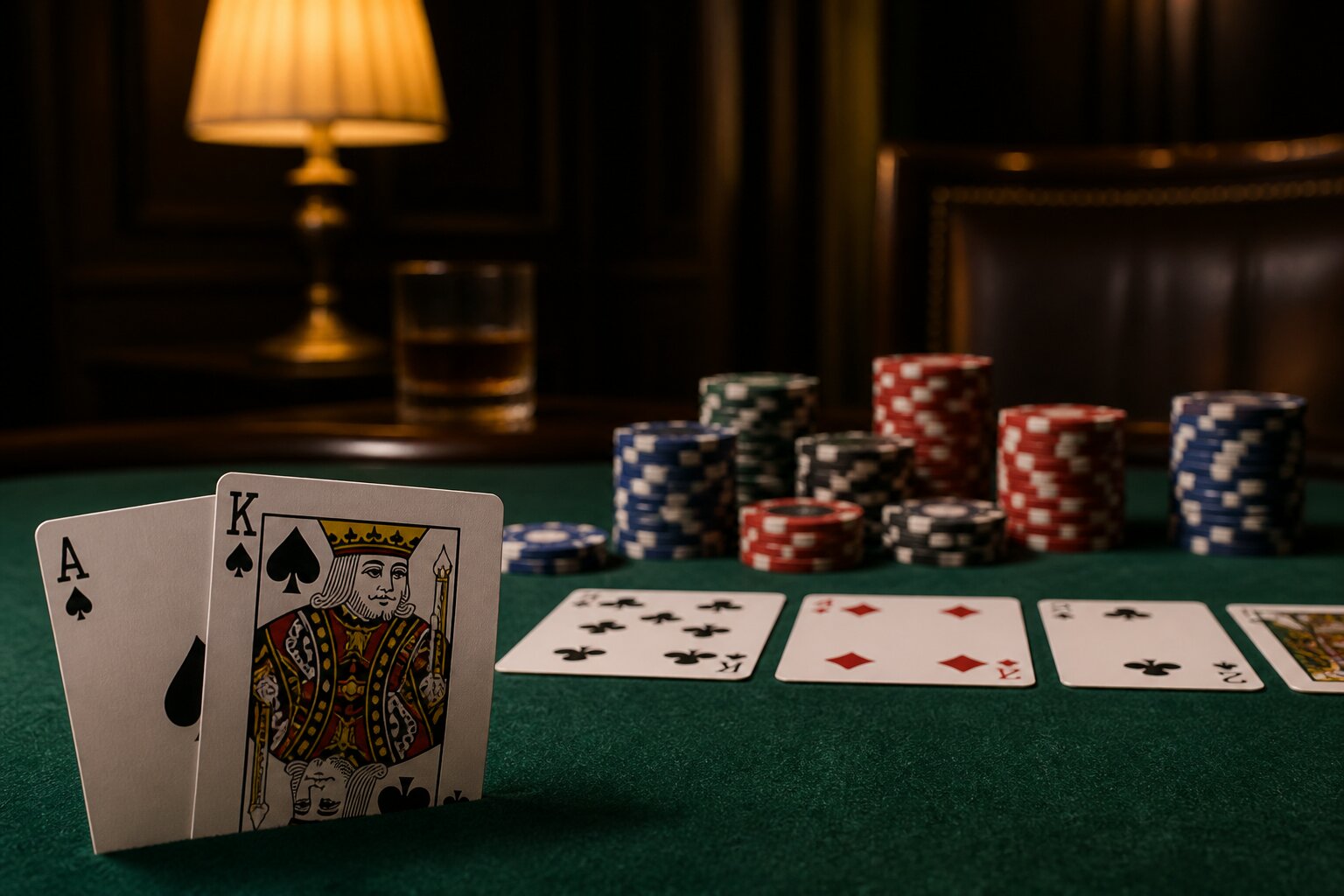
Overcards change how you assess a hand’s potential. If you hold Ace‑King on a 10‑7‑2 flop, both of your cards are overcards and you have two possible ranks that could pair on the turn or river. That possibility matters when you choose whether to call or fold.
Having two overcards is generally better than having one, because you have more ways to hit a pair on later streets. A single overcard still has value, especially if it is an ace, but it gives you fewer outs and typically less equity against made hands. The specific ranks of the overcards affect their worth: an ace will often perform better than a low overcard.
Overcards are useful for more than just raw pairing chances. They can act as blockers that make some strong holdings less likely for your opponent, and they can increase your potential to win with a single card on the turn or river. They also influence implied odds; if you are likely to extract additional value when you hit, overcards become more attractive.
However, overcards are not inherently strong enough by themselves. An opponent may already hold a pair, two pair or something better, and those hands beat unpaired overcards even if you later hit a pair. Treat overcards as useful information about future possibilities rather than a guarantee of success.
When deciding how to proceed, consider other factors alongside overcards:
- Your opponent’s betting patterns and how often they show down strong hands.
- The size of the pot and the price you must pay to continue.
- Your position at the table and how many streets of betting remain.
- Your implied odds and whether hitting a pair will allow you to win a large pot.
Keeping these points in mind helps you use overcards sensibly as part of a broader decision‑making process.
Common Overcard Hands and Their Names
Below are common high‑card combinations often discussed as overcards, with a brief note on each. These descriptions focus on how the cards typically behave post‑flop rather than promising any particular outcome.
Ace-King (“Big Slick”)
Ace‑King is a powerful starting holding because of the two top ranks. It often functions as overcards to early boards and has good potential to pair a top card.
When suited, Ace‑King gains additional value from flush and backdoor straight possibilities. Even off‑suit, it is a hand that plays well pre‑flop and can win large pots when it connects, but it is also vulnerable to being dominated by already paired hands.
Ace-Queen (“Big Chick”)
Ace‑Queen pairs the ace with a strong secondary card. It can act like Ace‑King in many situations but is slightly less robust, especially against Ace‑King itself.
Suited Ace‑Queen improves straight and flush prospects, while off‑suit versions should be played with a bit more caution, particularly out of position or against heavy action where stronger aces are likely.
King-Queen
King‑Queen is a solid high pair of ranks that frequently appear as overcards on low or mid flops. It’s especially useful in position when you can see how others act first.
Be aware that King‑Queen can be dominated by hands containing an ace or an already paired king, so pot control and reading opponents’ ranges are important when deciding how aggressively to continue.
Queen-Jack
Queen‑Jack is valued for connectedness as much as rank. It can be overcards on low flops and also has straight and flush potential if suited.
Suited Queen‑Jack is notably more playable because of the added flush draws and better straight combinations. Off‑suit Q‑J tends to be more situational and usually performs best when played with position or in multiway pots.
These nicknames are shorthand used at tables to speed up conversation. Holding any of these combinations does not ensure a win, and they should be evaluated alongside position, stack sizes and opponent tendencies. Play responsibly and avoid basing decisions solely on a hand’s nickname.
Why Are Overcards Important in Poker Games?
Overcards matter because they represent immediate opportunities to improve. They tell you which ranks could pair on later streets, and that influences how you interpret opponents’ actions and the level of risk you are willing to take.
Good players balance overcard potential with other factors:
- position at the table
- stack sizes
- betting patterns
These factors help form a fuller read. Overcards are one piece of a wider assessment rather than the whole picture.
It is also important to judge context. Overcards carry more value when you are heads-up and the board is unlikely to have paired, and they carry less value in multiway pots where one opponent may already have a made hand. Consider your actual outs and how much equity those outs give you against likely opponent ranges.
If you want to make stronger decisions, consider overcards alongside the broader context of the hand rather than relying on them alone. Be aware that overcards can be attractive but also deceptive, and they should not replace careful evaluation of range, position and pot odds.
Overcard Myths: The Truth About Their Significance
Some players overrate overcards, assuming they are a reliable path to winning. In reality, overcards are conditional: they only gain real value if they pair or combine with other improvements. Without pairing, an overcard often remains a weak holding that can be outdrawn by a range of made hands. That means an overcard on its own rarely justifies large, persistent investment in the pot.
Overcards can also be rendered irrelevant by existing made hands. If an opponent shows strength through betting or the board already favours strong made hands, your overcard’s potential is diminished. Conversely, on a dry board with few obvious draws, an overcard that pairs on the turn or river can suddenly become quite strong.
Another common mistake is treating overcards as a bluffing signal without considering how opponents have acted. Overcards can support aggressive lines if the situation warrants it, but they should not be the sole justification for risky plays. Consider opponents’ bet sizes, position and tendencies before using overcards to represent strength.
See overcards as informative possibilities—valuable, but not decisive unless the rest of the table dynamic supports continued play. Use them as one input among many: combine them with reads on opponents, board texture and pot odds to make a measured decision.
Spotting and Playing With Overcards on the Flop
When the flop comes, quickly compare your hole cards to the three board cards to see if you have overcards. That check helps you plan for the turn and river, but it shouldn’t replace observing betting patterns, position and opponent tendencies.
Knowing you hold overcards influences whether you stay in to see more cards or fold and preserve your stack. It also affects how you interpret aggression from others: heavy betting into a board where you have overcards often signals a made hand rather than weakness.
Recognising Overcard Situations
To spot an overcard situation, look at each of your hole cards relative to the board. If one or both beat the highest board card, you have overcards. For example, a Queen and Jack on an 8‑5‑2 flop are both overcards.
Understanding this simple comparison lets you assess potential pairings and plan your reaction for later streets.
Typical Outcomes When Overcards Appear
When you hold overcards, several outcomes commonly follow:
- A matching high card appears on the turn or river, giving you top pair.
- Neither overcard pairs, leaving you with high‑card value only.
- An opponent already has a made hand—such as a pair, two pair, or better—that outclasses any pair you can form.
These scenarios show why overcards are conditional assets: they provide paths to improvement but can also leave you with little to show if the board or opponents’ holdings don’t cooperate.
How Overcards Impact Betting and Decision Making
Overcards often affect whether a player chooses to continue in a hand or fold. They can justify a cautious call to see another card, but aggressive raises based solely on overcards are risky unless the table action supports a bluff or the implied odds are favourable.
Players consider several elements alongside overcards: their table position, the size of the pot, stack depths, and how players have been betting. Together, these form a reasoned approach to betting rather than a reaction driven only by the presence of higher ranked cards.
Practical decision making uses overcards as one factor in a broader strategic picture rather than as a standalone reason to commit chips.
Can Overcards Change the Outcome of a Poker Hand?
Overcards can definitely alter a hand’s direction. Hitting a pair on the turn or river converts potential into a made hand and can shift how the betting unfolds. It often forces opponents to reassess their range and can create opportunities to extract value or to bluff more credibly.
Even when an overcard pairs, that pair might not be the best hand at showdown. Opponents can still hold superior holdings, such as sets or two pair, and board texture and kicker strength will influence whether your new pair is strong enough to win.
Outcomes are determined by the combined effects of:
- card runouts,
- betting actions, and
- how well you read opponents.
You should also consider factors such as pot odds, implied odds and fold equity when deciding how to continue after an overcard appears. Overcards introduce possibilities, but those possibilities only matter when they translate into actual improvements or when they fit within a wider tactical plan and the current betting dynamics.
Understanding Overcard Probability and Odds
A basic grasp of probability helps you estimate how often overcards will pair and whether it’s worth continuing in a hand. This isn’t about certainty; it’s about informed judgement.
Basic Overcard Odds
If you hold Ace‑King and the board is 10‑6‑2, there remain three Aces and three Kings unseen, giving six outs to make a pair. The chance to hit one of those outs on the next card is about 13%, and across both the turn and river it’s roughly 24%. These figures are approximate and don’t account for opponents’ hole cards or folded cards.
Playing with Probabilities in Mind
Using these odds helps you decide whether to invest more in a hand. When the probability of improvement aligns with pot size and your read on opponents, continuing can be justified. When it does not, folding preserves your chips for better opportunities.
Approaching overcards with an awareness of their odds and the surrounding context leads to steadier, more consistent play.
Final thoughts
Overcards are a straightforward but important element of hand evaluation. They signal possible improvement and shape how you read a situation, yet they must be weighed against betting patterns, position and the likelihood that opponents already hold stronger hands. Use overcards as one tool among many: informative, conditional and most effective when combined with sensible judgement.
**The information provided in this blog is intended for educational purposes and should not be construed as betting advice or a guarantee of success. Always gamble responsibly.