
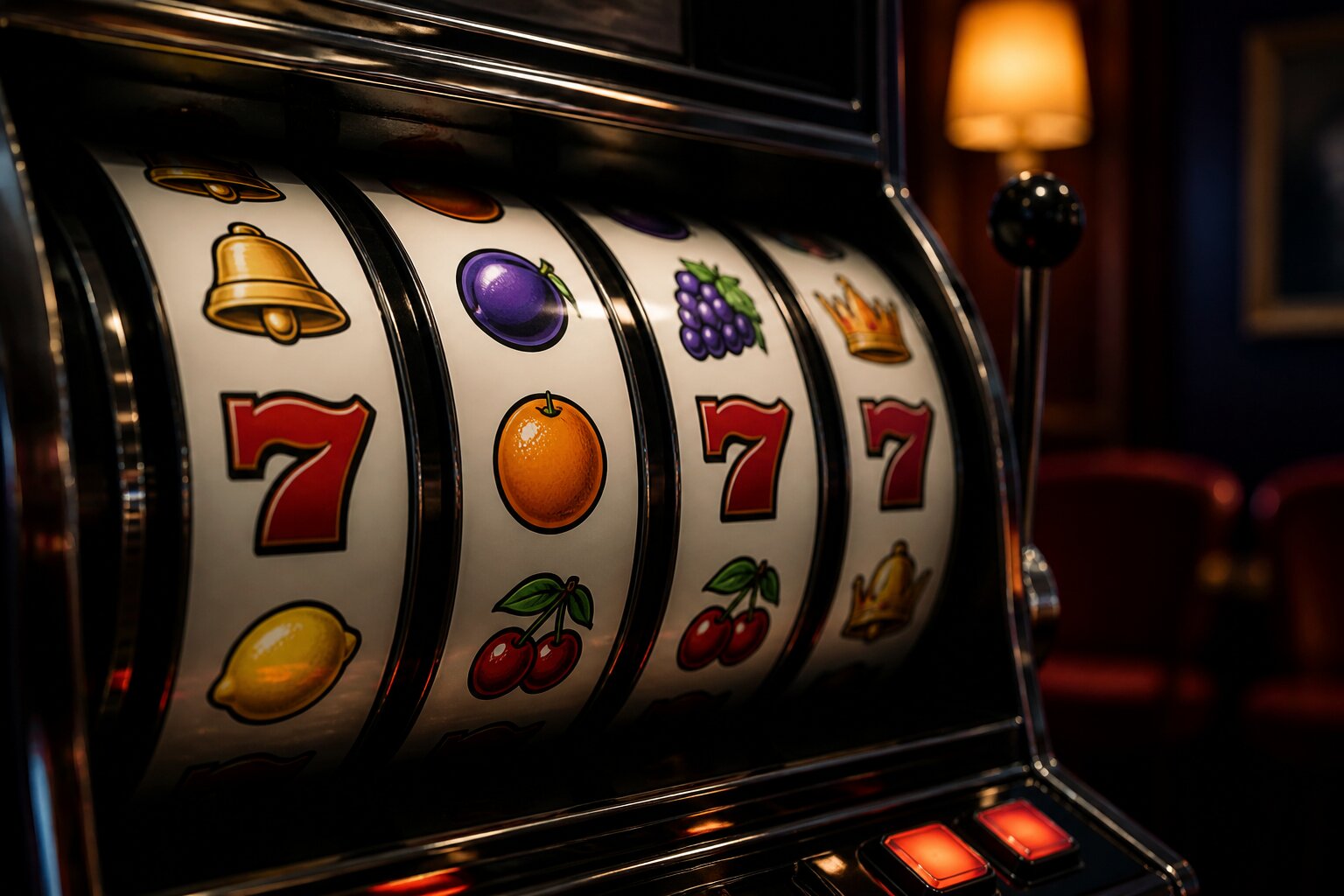
Ever wondered how many symbols are actually spinning past your eyes when you press play? Whether you’re familiar with slots or just curious, the way reels are built is more interesting than it first appears.
Each online slot follows its own design choices, and the number of symbols on a reel can change the feel of the game and the kinds of features you encounter. Read on and you’ll get a clear picture of what lies behind each spin.
If you play, set personal limits and use the site’s safer-gambling tools to keep control of your time and spending.
What Determines the Number of Symbols per Reel?
Game designers pick the number of symbols to suit a slot’s theme, pace and features. A simple retro game will usually have fewer symbols to keep gameplay straightforward, while a modern title with free spins, bonus rounds or cascading wins needs room for special icons and more combinations.
Technology matters too. Mechanical machines were limited by physical space and typically held around 10–20 symbols per reel. Today’s online titles use software and random number generators, allowing virtual reels that contain many more positions than the player sees on screen. That lets developers create more varied combinations and feature triggers without crowding the user interface.
All reputable games also undergo independent testing to confirm the randomness and fairness of outcomes, and their return-to-player (RTP) settings are established at design and checked by regulators.
Types of Slot Machine Reels Explained
Understanding reel types helps when you’re choosing a game, because the mechanics determine what you’ll see and how features are delivered. Different reel systems also influence how immersive or straightforward a slot feels.
Here are the main styles you’ll encounter and what sets them apart.
Classic Mechanical Reels vs. Video Reels
Classic mechanical reels are the original format: physical drums with fixed symbols. Their limitations shaped the simple gameplay of early machines, which tended to rely on a handful of well-known icons and straightforward paylines.
Video reels are screen-based and far more flexible. Without physical constraints, they can show animated symbols, layered graphics and more complex payline arrangements. That freedom gives developers the space to build elaborate themes, bonus mechanics and visual storytelling.
The Role of Virtual Reels in Modern Slots
Virtual reels operate inside the game’s software and often contain many more stops than the visible reel shows. For example, a visible reel with 20 symbol positions might be mapped to a virtual reel with 200 stops; some symbols occupy more stops than others. This mapping lets designers weight outcomes, create rarer feature triggers, and introduce larger symbol sets without changing what the player sees on screen.
The result is a richer design palette: more symbol variety, varied hit frequencies and the ability to tune features such as jackpots or bonus rounds while keeping the interface clean.
How Do Different Slot Types Affect Symbol Variety?
Reel count and construction directly influence which symbols appear and how they behave. Three-reel classics usually use a compact symbol set like fruits or bars, which keeps combinations easy to follow and payouts straightforward.
Five-reel and beyond layouts give developers space for themed symbols, wilds, scatters and special icons that unlock mini-games or multipliers. Some games also use expanding symbols or stacked reels to create the impression of more frequent or larger wins without changing the underlying probabilities.
It’s worth noting that symbol variety is primarily an entertainment choice. The random-number processes and RTP determine outcome patterns, so a game with more symbols won’t inherently be more generous than a simpler one.
Common Slot Symbols and Their Meanings
Symbols do more than decorate the reels; they tell you how a game works. Familiar sets include fruit, bar icons and sevens in retro-style titles, while modern games draw on characters, artefacts and thematic imagery to support storylines and features.
Certain symbol types perform specific roles:
- Wilds: substitute for other symbols to help form winning combinations.
- Scatters: typically trigger bonus features or free spins when enough appear anywhere on the reels.
- Bonus symbols: unlock extra rounds, interactive segments or multipliers.
The paytable for any game explains each symbol’s value and special function. Reading it gives a quick sense of where the value lies and which icons to watch for during play.
Why Does the Number of Symbols Matter in Slots?
The symbol count affects both the mathematical structure and the player experience. On the technical side, more symbols and virtual stops increase the number of possible combinations and let developers set frequencies for particular outcomes. For players, a larger symbol set can make a game feel more varied and allow for complex features that keep sessions interesting.
However, the number of symbols doesn’t change the established RTP or the way randomness is enforced. Those are set during development and confirmed through testing. So while symbol variety can change the way a game feels, it doesn’t change the underlying fairness.
Popular Myths About Slot Reel Symbols Debunked
There are several common misconceptions that can lead to confusion about how slots behave. Clearing these up helps you make informed choices and enjoy games for what they are.
Myth: More Symbols Mean Bigger Wins
The amount a game pays out is determined by its paytable and design choices, not by the sheer number of symbols. A game with many symbols can offer small, frequent payouts or rare, large prizes—either is possible depending on how the developer configures the maths.
Myth: Certain Symbols Are “Due” to Appear
Because each spin is generated independently, no symbol is scheduled to appear at any given time. Outcomes are produced by tested random-number processes rather than by cycles or patterns you can track.
Myth: You Can Predict Outcomes by Studying Symbols
Keeping a record of past spins or studying reel strips won’t give you predictive power. The distribution of symbols and their virtual-stop mapping are design elements, not indicators of future results. Independent testing ensures outcomes remain random and compliant with regulatory standards.
We hope this clears up how symbols and reels shape the slot experience. Understanding these elements helps you pick games that match your preferences and enjoy them with confidence.
**The information provided in this blog is intended for educational purposes and should not be construed as betting advice or a guarantee of success. Always gamble responsibly.