
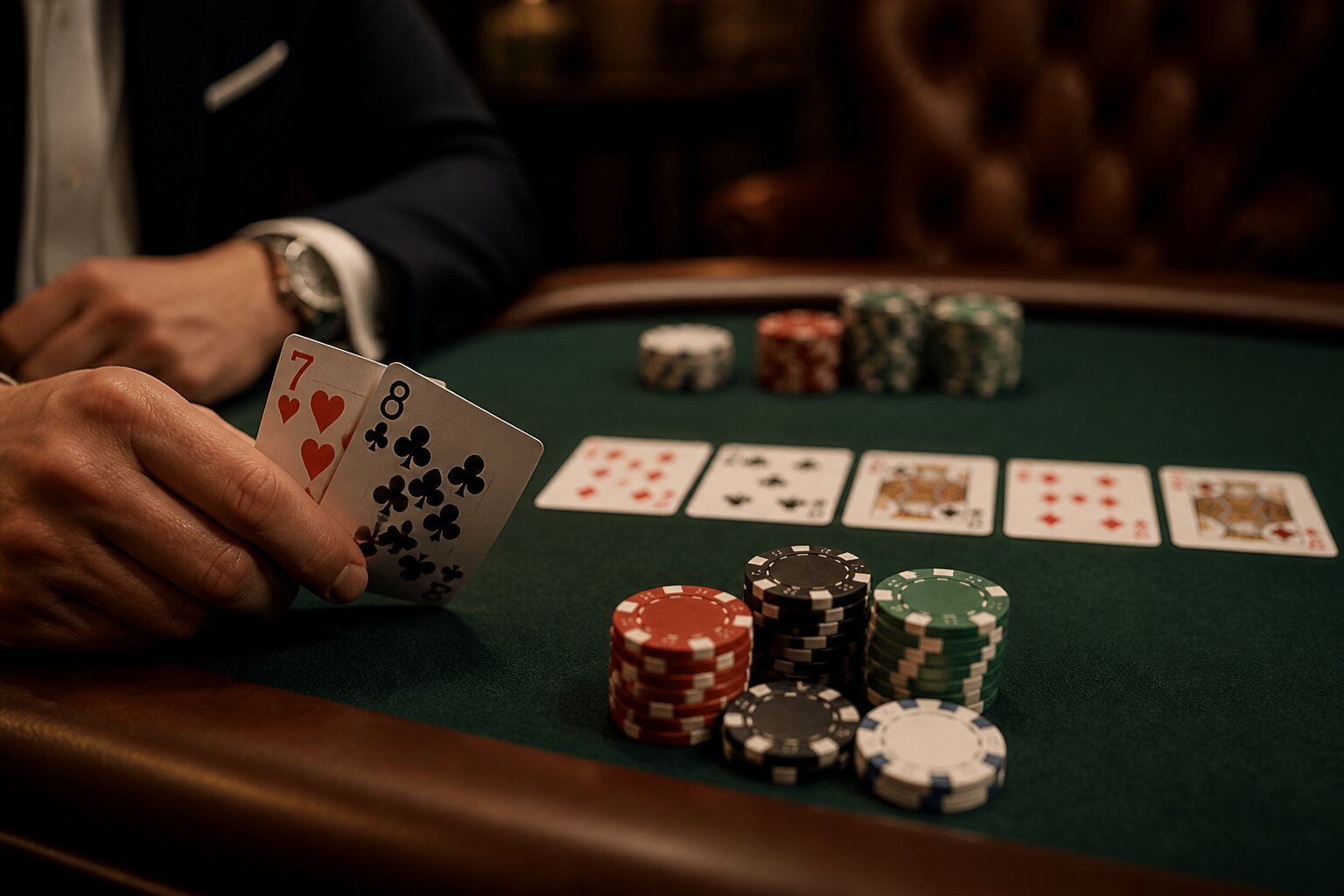
If you’ve spent time at the poker table, you might have heard the phrase "drawing dead" and wondered what it really means. It crops up in tense moments when the cards still to come cannot change the outcome of a hand.
This guide explains the term clearly, shows how to spot these situations, and gives practical examples from popular games so you can make better decisions at the table.
Keep going — the examples will make the concept easy to recognise when you next play.
What Does "Drawing Dead" Mean in Poker?
When you are drawing dead in poker, there are literally no cards left in the deck that can make your hand the winner. Even if the remaining community cards fall exactly as you might wish, your best possible hand still loses.
Players typically discover they are drawing dead after the flop or the turn, when the visible cards and betting make another player's superior holding obvious. For instance, you might be chasing a flush, but if an opponent already has a full house, a completed flush cannot beat it.
Recognising this situation fast stops you from committing more chips to a pot you cannot win. That kind of judgment is part of playing well and protecting your bankroll.
How to Identify a Drawing Dead Hand?
Identifying a drawing dead hand is a mix of noticing the board, reading the betting, and working out the outs - the cards that could improve you. If that count reaches zero, you are drawing dead.
Start by considering the strongest hands the board allows and what your opponents' actions suggest they hold. Heavy betting into a paired board often signals a full house or quads. If such a hand already beats your possible improvements, there are no cards that can help.
Counting outs is a straightforward check: list every card that would improve your hand to a winning one, and if there are none, the situation is clear. Over time this becomes instinctive and helps you avoid costly calls.
Common Poker Scenarios Where Players Are Drawing Dead
Drawing dead can occur in many settings, and it is more likely in games that produce bigger hands. Spotting typical scenarios helps you stay alert and fold when the maths show you cannot win.
Knowing common board developments - like paired boards that allow full houses, or boards that complete straights while also enabling quads - makes it easier to see when further action is futile. The following examples use Texas Hold'em and Omaha to show how such situations arise in practice.
Drawing Dead in Texas Hold'em Examples
Imagine you hold pocket aces and the flop gives you trips with a queen and a king also on the board. You feel strong, but if an opponent holds pocket queens, and the turn is another queen, they now have quads. At that point no remaining card can turn your hand into the winner.
Another Hold'em spot: you are on a four-card flush after the turn, but the board pairs on the river, creating the possibility of full houses. If an opponent shows a full house, your flush - even if complete - no longer wins. In both examples the key is recognising that a better hand is already possible from the visible cards.
Drawing Dead in Omaha Poker Examples
Omaha uses four hole cards, so board textures often produce large hands and more ways to be outdrawn. For example, you might have a made straight on the turn, but a paired board plus heavy betting could indicate an opponent has a full house or quads. Even if the river improves your hand in isolation, it may not catch up to theirs.
Another common Omaha case involves competing flushes. You can complete a high flush only to find an opponent has a higher flush using the community cards and their hole cards in combination. Because so many card combinations are possible, it is important in Omaha to assess how the board can interact with the range you assign to each player.
These examples highlight why careful observation of the board and opponents' actions is vital in any variant.
Is Drawing Dead a Poker Myth?
Drawing dead is not a myth; it is a precise description of a situation where no remaining card can change the result. It is an objective state determined by the cards that have been dealt and the rules used to rank hands.
The concept arises from two basic facts about the game:
- the composition of the deck, which fixes which cards remain unseen, and
- the rules that determine hand rankings, which decide which combinations beat others.
This idea is grounded in combinatorics and in the known structure of community and hole cards, rather than in guesswork or superstition. If you can see that every possible card left in the deck still leaves your opponent with a better hand, you are drawing dead.
Recognising drawing dead at the table helps you avoid throwing away money on a hand that cannot win. Use this understanding to make clearer choices, such as folding earlier, controlling losses, and preserving your chips for situations where you have real outs.
How Does Drawing Dead Affect Poker Outcomes?
Knowing when you are drawing dead directly affects decision-making and results. Once you are drawing dead, continuing to invest chips has no mathematical hope of changing the outcome, so recognising this quickly prevents you from losing more than necessary and preserves your stack for future hands.
This awareness also reduces tilt and poor choices later in a session. Players who accept that a hand is over can fold without frustration and focus on upcoming spots where skill and correct strategy can have an impact.
There are some common signs that you are drawing dead. These include:
- the board and betting line make it impossible for your hand to win even if you improve,
- an opponent’s range is so strong that only an impossible card would beat them,
- all reasonable lines of play leave you with no outs or with outs that are already counterfeited.
Even experienced players face drawing dead situations. The value comes from limiting losses and reallocating resources to hands where skill can influence the result rather than throwing chips into hopeless situations.
In short, recognising these spots improves long-term play because it reduces avoidable mistakes and helps maintain chip equity. It also supports responsible play by encouraging sensible bankroll management and disciplined decision-making.
Key Takeaways About Drawing Dead in Poker
Understanding drawing dead helps you recognise when no remaining card can turn your hand into a winner, so you can avoid further losses and make more informed choices at the table.
Main Points to Remember
Drawing dead means there are no cards left that can make you win a hand.
It is a concept rooted in the deck and hand rankings, not conjecture.
Spotting these moments teaches better table discipline and reduces unnecessary risk.
Knowing poker terminology like drawing dead supports clearer decision-making, though it does not change the cards already dealt.
Gamble within your means and follow legal age rules in your area. If gambling stops being enjoyable or you worry about control, seek guidance from appropriate support services. Stay safe and play responsibly.
**The information provided in this blog is intended for educational purposes and should not be construed as betting advice or a guarantee of success. Always gamble responsibly.