
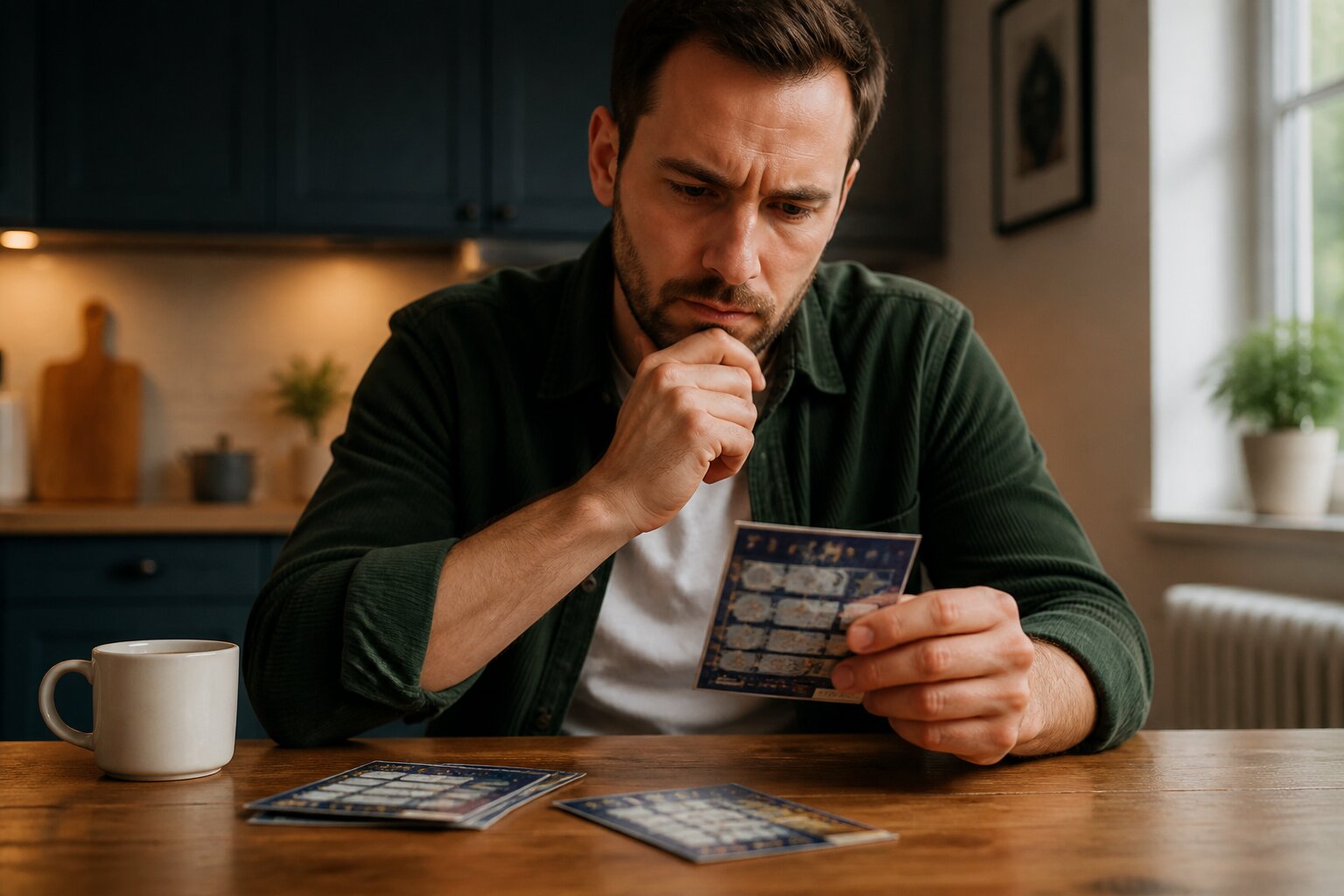
If you’ve ever scratched off a shiny new card, you might have wondered whether those stories of massive wins are realistic or simply rare exceptions. With headline jackpots and bold prize amounts, the temptation to believe a big win is within reach is understandable.
This article breaks down how scratch card odds work, explains the difference between common card types, and shows why most prizes are modest. Read on to learn the facts so you can decide for yourself whether the thrill is worth the spend.
How Do Scratch Card Odds Work?
Every scratch card game publishes odds, usually on the packaging or the game information page. These odds express the ratio of winning cards to the total number printed. For example, if there is one winning card for every four produced, the odds are 1 in 4. That figure covers all prize levels combined, so it doesn’t guarantee a win within a small number of purchases.
Odds are calculated across the entire print run of a game, which is why one pack of cards might contain no winners while another contains several. The headline top prizes are far rarer than the overall odds suggest; they are priced to occur only a handful of times across many millions of cards.
Each individual card is an independent event and outcomes are determined at the time of printing. With that in mind, the next section outlines the different types of cards you’ll come across and how they affect the experience of play.
Types of Scratch Cards Available in the UK
Scratch cards come in several formats, each offering a slightly different way to play. The variation most players notice is between immediate-result games and those that feed into a later draw. Presentation, themes and bonus features also change the player experience without altering the basic odds mechanics.
Different retailers and operators may stock different mixes of formats, so the available range can vary by location and over time. Prices and prize levels also differ between products, which affects how they feel to play even when the underlying mechanics are similar.
Instant Win vs Draw-Based Scratch Cards
Instant win games show the result as soon as the panel is revealed. They are straightforward and give immediate feedback, which is why they remain the most popular format. The clear, quick outcome can be satisfying for players who prefer to know the result straight away.
Draw-based cards require entering a code or registering the card for a scheduled draw; that introduces a waiting period and a different kind of anticipation compared with instant reveals. Some players enjoy the added suspense and the ritual of checking back for the draw, while others prefer the immediacy of instant wins.
Both formats use the same underlying approach to odds: outcomes are determined by the printed distribution of prizes, not by anything that happens at the point of sale. That means the likelihood of any particular prize is set when the tickets are produced and published, and cannot be changed by when or where the card is bought.
Branded vs Generic Options
Some scratch cards carry familiar brands or entertainment tie-ins; others stick to neutral themes. Branded cards often include themed artwork or bonus mini-games linked to the licence, but that is a cosmetic difference. Themed designs can make a product more appealing to fans of a franchise, or provide an extra layer of novelty without changing the core game mechanics.
Branded and generic cards typically follow the same prize structures and odds, so the choice is largely about which presentation you prefer rather than any advantage in winning. Players should choose based on personal taste, budget and how they want to experience the game, and remember that all legitimate scratch cards operate under the same regulatory and prize-distribution rules.
What Are the Chances of Winning Major Prizes?
Major prizes are intentionally scarce. Every game lists separate odds for different prize tiers, and the top-tier odds are usually many orders of magnitude longer than the odds of winning any prize. This scarcity is part of how large headline prizes are funded and advertised, and it means players should not expect regular success with top prizes.
Top Prize Odds Explained
Top prizes commonly carry odds in the millions to one. For large headline amounts, there will be only a small number of winning tickets among the whole print run. In practice, this means the chance of finding a top prize on any given card is extremely low, and some top prizes may be claimed early in a game’s life.
Although the printed odds remain the same for each ticket at purchase, the number of remaining unclaimed top prizes can fall as winning tickets are found, so the practical chance of encountering an unclaimed top prize declines over time. Retailers and operators may publish updates on remaining prizes, which can help players understand whether a game still has big prizes available.
Average Returns and Smaller Wins
Smaller prizes are far more frequent and account for most of the “winners” reported. A game that advertises odds of one in four for any prize is reflecting the combined frequency of all prize levels, with the majority being modest amounts such as the cost of the card or slightly more. Those smaller wins often offset the cost of playing rather than delivering a significant profit.
Most scratch-card games also publish a Return to Player (RTP) percentage—often between 60% and 75%—which estimates how much of the money staked is redistributed as prizes over the whole print run. RTP is useful for comparing games but does not predict individual results or guarantee returns for a particular player. Remember that all outcomes are governed by chance and that past play does not influence future results.
How Are Prize Odds Displayed and Regulated?
In the UK, providers must display the odds and prize information clearly. For physical cards this is usually on the back of the card or its outer sleeve; for online games it appears on the information page prior to purchase.
The regulator requires that information to be accurate and accessible, and games are subject to checks to ensure the advertised odds match the actual distribution of prizes. That provides a level of transparency so players can see the true likelihood of different prize tiers before they spend.
Clear labelling also helps separate fact from myth, which we’ll examine in the next section.
Common Myths About Winning Big on Scratch Cards
A number of persistent beliefs suggest ways to beat the system, but these don’t hold up to how scratch cards are produced. The idea that certain shops, times of day or scratching techniques improve outcomes is unfounded because prize allocation is fixed during printing. Another widespread misconception is that a series of losses makes a win more likely next time; statistically, each card remains an independent event.
Rumours that buying in bulk or choosing cards from specific roll positions will yield better chances also ignore the randomised distribution used by reputable operators. Recognising these myths helps set realistic expectations and keeps play focused on entertainment rather than strategies that don’t affect probability.
Where Can You Find Reliable Scratch Card Odds?
The most dependable place to find odds is on the product itself or the operator’s official site. Licensed operators are required to publish up‑to‑date prize breakdowns and odds, and major games typically include full details of how many prizes of each size exist in the print run. These official pages often explain how overall return to player figures are calculated and will note whether there are any unclaimed prizes remaining.
Avoid relying on anecdotal reports from forums or social media, which can be incomplete or misleading. Such sources may reflect individual experiences rather than the full statistical picture, and they do not carry the same verification as regulator or operator information. For the clearest, most trustworthy data, consult operator disclosures, the game’s official rules, and publications from the regulator. These sources provide verified information you can use to make informed choices about which games to play.
Is It Possible to Improve Your Chances of Winning?
There is no method, purchase pattern or technique that changes the printed odds of a scratch card. Because outcomes are fixed across the production run, every card of the same game has the same theoretical chance of each prize. The only control a player has is how much they spend and how often they buy cards.
Keeping purchases moderate and within a personal budget helps manage spending while still allowing you to enjoy the game. Understanding payout figures and how they relate to your spending can help you make informed decisions about play and affordability.
Buying more cards increases the number of attempts you make, but it does not change the odds on any individual card or guarantee a win. The total number of major prizes in a game is limited, so big prizes are rare and spread across the whole print run. Always remember to check tickets carefully and play within your means.
Understanding Payout Rates and How They Affect You
Payout rates, or RTP, indicate the proportion of total stakes returned as prizes over the entire distribution of a game. For example, a 70% RTP suggests that for every £100 put into the game across all players, around £70 is awarded back in prizes overall. This is a long‑term, theoretical measure and not a forecast for any single player’s experience.
RTP is useful when comparing games because it summarises how generous a prize structure is. However, it doesn’t alter the fact that individual outcomes are random and can vary widely from the average. Knowing RTP helps set expectations about how likely you are to recoup part of your outlay over many plays, but it shouldn’t be taken as a guarantee. Moving on, that reality is central when thinking about whether scratch cards are suitable for chasing big wins.
Should You Play Scratch Cards for Big Wins?
Scratch cards are designed primarily as short, low‑cost entertainment. While large prizes exist and are occasionally won, they are rare by design. The most sensible approach is to view scratch cards as a way to enjoy a brief moment of suspense, rather than a reliable route to major financial gain.
Only people aged 18 or over should buy and play scratch cards. If choosing to play, set clear limits on spending and keep it within money that won’t affect essential bills. Treating the activity as entertainment keeps expectations aligned with how these games are structured and helps ensure play remains controlled and enjoyable.
Scratch cards offer quick thrills and the occasional headline prize, but their odds make big wins exceptional. With clear information available on every game, you can decide whether that entertainment is worth the cost and play in a way that suits your preferences and budget.
**The information provided in this blog is intended for educational purposes and should not be construed as betting advice or a guarantee of success. Always gamble responsibly.