
Ever popped into your local newsagent for a pint of milk and wondered whether you should buy a Health Lottery ticket at the till? For many people, picking up a ticket while doing everyday shopping is a quick, familiar habit that also supports health-related causes across Great Britain.
Buying a Health Lottery ticket in-store is similar to other retail transactions but has a few particular points to be aware of — from how you choose numbers to what happens if you win. Understanding those details makes the process smoother whether it’s your first time or you already play occasionally.
Where Can You Buy Health Lottery Tickets on the High Street?
Health Lottery tickets are available at a wide range of retail outlets on the high street, commonly sold in newsagents, convenience stores, local off-licences and some larger supermarkets and petrol forecourts. Availability can vary by location and by whether an individual shop has chosen to sell the lottery, so not every outlet will offer tickets.
Look for Health Lottery signage at the counter or in the shop window, or simply ask a member of staff if they stock tickets. Some retailers may display posters or point-of-sale materials near the till to make it easier to spot.
If you prefer to check before you travel, many retailers publish a list of participating outlets online or offer a store locator on the Health Lottery website. Opening times, payment methods and any age or purchase limits can differ between shops, so it is sensible to confirm those details with the retailer when planning a visit.
How the In-Shop Purchase Process Works
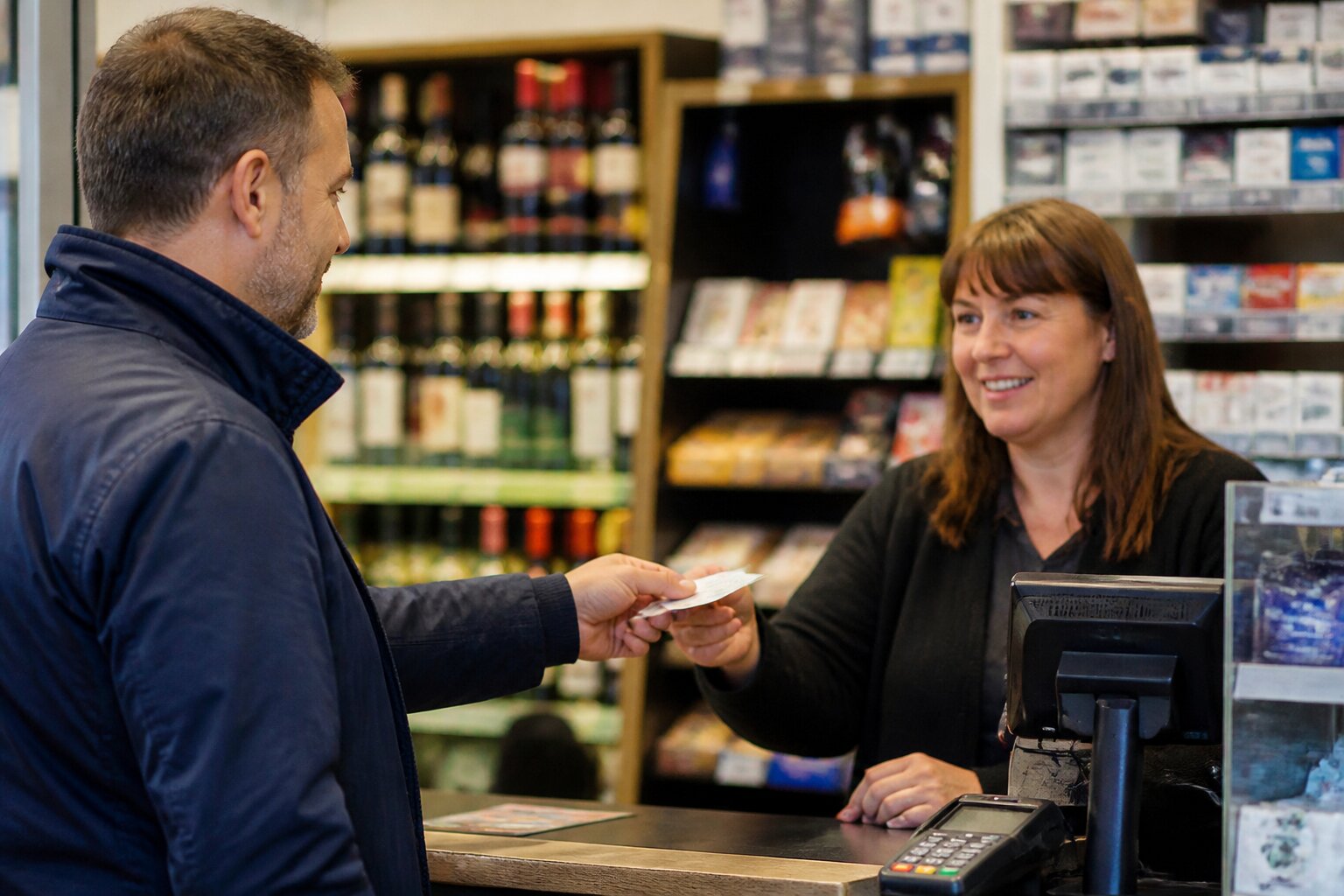
Buying a Health Lottery ticket in a shop follows a clear, repeatable process. At the counter you’ll see play slips and a pencil; you can mark five numbers between 1 and 50 or ask for a random selection instead. Hand the completed play slip to the cashier, who will scan it and print an official ticket. Keep that printed ticket safe, because it is required to claim any prize.
Shop staff may ask for photographic ID if you appear under 25, in line with Challenge 25 age-checking practice. Payment is usually by cash or debit card. The following section covers the practical points to check before you buy.
What Do You Need to Know Before Buying?
Before purchasing, it helps to be aware of the main legal and practical considerations so the experience is quick and trouble-free. Knowing a few simple rules in advance will save time and reduce the chance of problems when it comes to claiming prizes.
Minimum Age Requirement for Purchasing
You must be at least 18 years old to buy a Health Lottery ticket in the UK. Retailers routinely display age restriction notices and staff will check ID where appropriate to ensure compliance with the law. Typical forms of ID that may be accepted include a passport or a photocard driving licence, though individual retailers may ask for other recognised proof of age.
Refusing to provide suitable ID may mean you cannot complete the purchase. This is part of legal requirements designed to prevent underage gambling, and staff are obliged to follow these checks.
Accepted Payment Methods in Shops
Most retailers accept cash and debit cards for lottery purchases. Credit cards and cheques are not accepted for lottery sales under current regulations. If you plan to pay by card, ensure the shop’s card terminal supports the transaction.
Some shops may offer contactless payments or mobile wallet options, but availability varies by retailer. It is a good idea to have an alternative payment method on hand in case a particular terminal is unavailable.
Collecting and Keeping Your Ticket Safe
Once you receive your printed ticket, keep it secure. Many players sign the back of the ticket to help establish ownership. Store it somewhere you can easily find it if needed, because only the original physical ticket can be used to claim a prize.
Avoid lending or giving your ticket to someone else, and do not rely on copies or photographs as proof of ownership. If you lose the ticket, it can be very difficult to claim any winnings, so treating it like cash is sensible.
If you want a quick reminder of the result options and claiming process, the next section explains how to check results and handle winnings.
Examples: Real-Life Scenarios of Buying Health Lottery Tickets in Shops
On a Saturday morning, Sarah picks up a play slip at her local convenience store, fills in her chosen numbers, pays by debit card and signs the back of the ticket before putting it in her purse.
After work, Tom asks for a ticket at a neighbourhood newsagent. The cashier asks to see ID because Tom looks under 25; once he provides it, the purchase proceeds and he keeps the ticket safe in his wallet.
Mina’s mother opts for a random-number selection at the counter. She pays with coins from her purse, receives the printed ticket and tucks it into a secure place at home.
These scenarios show the typical flow at the counter: choose numbers (or request a random selection), pay, collect the ticket and keep it safe. If a ticket is a winner, the next section sets out how to check and claim prizes.
How Do You Check Results and Claim Prizes from Shop Purchases?
There are several straightforward ways to check whether a ticket is a winner. You can return to the shop and ask the cashier to scan your ticket; most tills will indicate any prize. Results are also published on the Health Lottery website and in some newspapers.
Small prizes, typically up to a retailer’s payout limit such as £50, can usually be claimed at the shop where the ticket was purchased. The retailer will scan the ticket and pay out in cash or by debit, depending on their policy. Larger prizes require a postal claim: complete the claim form printed on the back of the ticket, include the original ticket and send it to the address provided. Large claims may also require proof of identity and address, and payment is typically issued by cheque once verification is complete. Processing times vary, so keep copies of any correspondence and allow a couple of weeks for larger claims to be handled.
With the practicalities of buying and claiming covered, the next question many people ask is whether they can buy tickets on behalf of someone else.
Can You Buy Health Lottery Tickets for Someone Else?
You may buy a Health Lottery ticket as a gift for an adult, provided the recipient is 18 or over. It is common to place a ticket inside a birthday card or give one to a family member. Handing a ticket to anyone under 18 is not permitted and breaches the law, so make sure the recipient is of legal age before you purchase.
When buying for someone else, consider signing the ticket or otherwise documenting who it is intended for so there is no ambiguity about ownership if it becomes a winning ticket. A clear record can help avoid disputes about who should claim any prize. It is also sensible to keep the receipt or take a photo of the ticket and the purchase details, in case proof of purchase is needed later.
Bear in mind retailers may ask for proof of age when you buy on behalf of someone else, and they may refuse the sale if they have any concerns. If a ticket wins, the rules for claiming prizes still apply and the person who presents the ticket usually needs to provide appropriate identification. This means the recipient should be prepared to prove their age and identity when claiming a prize.
The Bottom Line: How to Buy Health Lottery Tickets in Shops
Purchasing a Health Lottery ticket in a shop is a simple process: choose numbers or request a random selection, pay by cash or debit card, and keep the printed ticket safe. Expect an age check if you look under 25 and be aware that different retailers may have slightly different payout limits for small prizes.
Check results at the shop, online or in print, and follow the correct claims route depending on the prize size. Above all, treat play as an occasional form of entertainment and spend only what you can comfortably afford. Follow the rules, protect your ticket and enjoy taking part in a way that is safe and lawful.
**The information provided in this blog is intended for educational purposes and should not be construed as betting advice or a guarantee of success. Always gamble responsibly.