
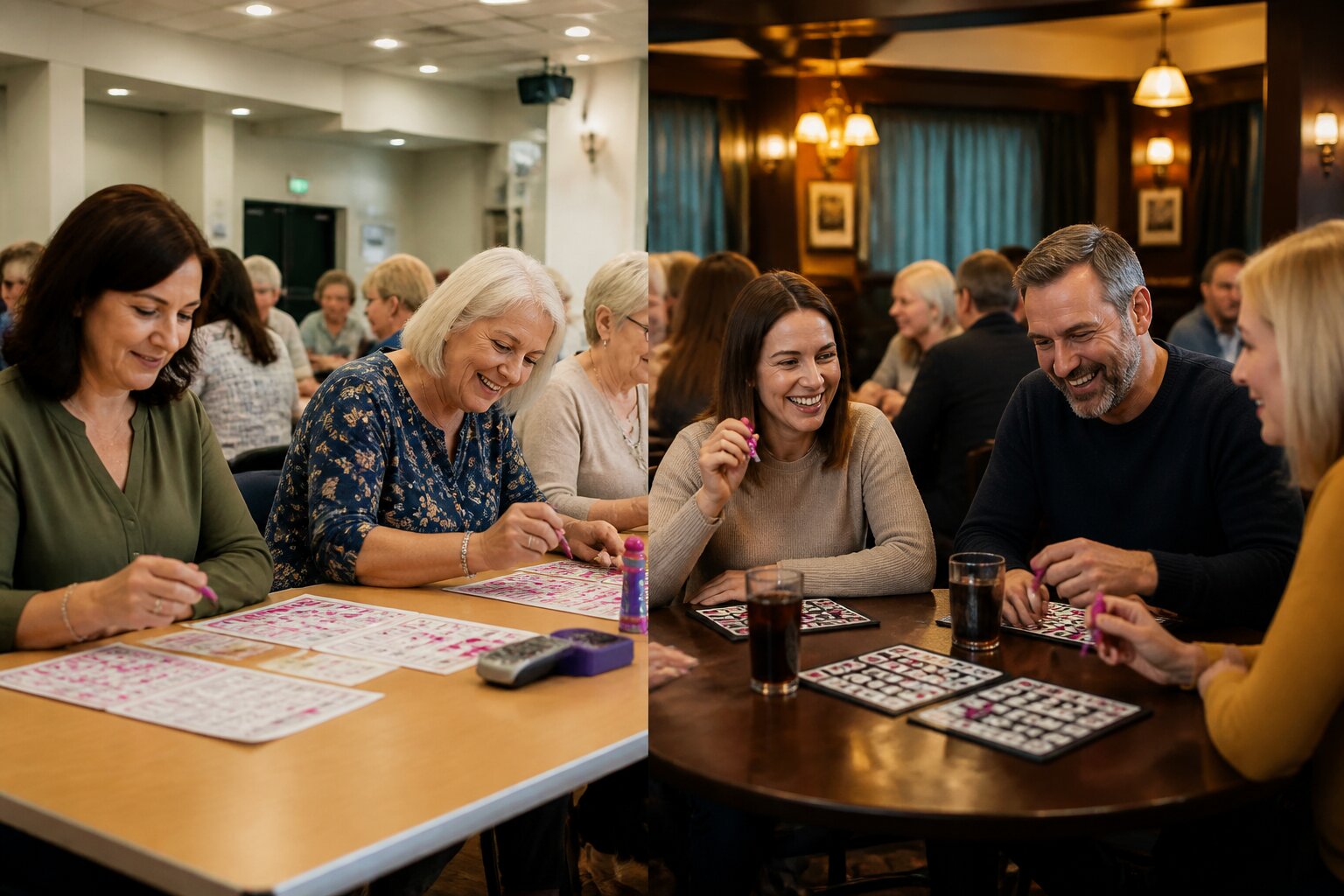
Bingo is popular on both sides of the Atlantic, but the game can feel quite different depending on where you play. Understanding those differences makes the experience clearer and more enjoyable, whether you usually play in-person or online.
Curious about card layouts, calls, or prize structures? This guide breaks down the main contrasts between American and UK bingo so you can spot what suits you best and follow games with confidence.
Read on for a practical, easy-to-follow comparison that highlights how each style plays out in real sessions.
What Are The Main Rules Of American Bingo vs UK Bingo?
The most obvious contrast is the card format and how wins are defined.
American bingo commonly uses 75 balls and 5x5 cards marked with B‑I‑N‑G‑O across the top. The centre space is free and patterns for a win are shown before play begins—these might be a straight line, four corners, an X or a themed shape. Games vary by the pattern required and may run a single pattern per round or several different pattern rounds in a session.
UK bingo typically uses 90 balls and tickets with three rows and nine columns, where each row contains five numbers. Players aim for one line, two lines, or a full house (all numbers on the ticket). Those three prize stages shape the pace and expectations of a UK session: early wins for single lines, a mid-session two-line target, and the Full House often drawing most attention toward the end.
Both formats share the same basic mechanic—numbers are announced at random and players mark their cards—but the layouts and winning conditions create distinct rhythms to the game.
How Do The Bingo Cards Differ Between The US And UK?
Card design drives gameplay in both formats.
American cards are square, with five rows and five columns and the centre as a free spot. Numbers are divided into columns under the letters B, I, N, G and O, each covering a fixed range. The visual grid supports pattern-based play and makes it straightforward to check progress toward complex shapes.
UK tickets are rectangular and show three rows with gaps where no number appears. Each row contains five numbers among nine columns, so a single ticket has 15 numbers in total. Without a free space, attention focuses on completing rows and eventually filling the whole ticket. The layout leads to a different kind of engagement: tracking lines across rows rather than forming shapes within a square.
Spotting these differences at a glance tells you what to expect from the session and how to follow the caller more easily.
Prize Structures: How Are Winnings Paid Out?
Prizes reflect the win conditions and how a game is organised.
In American sessions, payouts generally match the pattern being played. A game that calls for a specific shape or line will deliver the prize to the first player who completes it. Special games can offer larger jackpots or bonus prizes when organisers announce them in advance, and the prize pool is determined by ticket sales, entry fees and the session’s rules.
UK sessions award prizes in set stages: the first line, the second line, and the Full House. Prize sizes shift depending on the number of players and tickets sold, and hosts often allocate fixed portions of the prize fund to each stage so players know what’s at stake as the session progresses.
Before you play, take a moment to check the session rules so you understand how prizes are distributed and what is required to claim them.
What Are The Most Popular Bingo Variants In Each Country?
Each country favours a few familiar formats but also offers alternatives for different tastes.
In the US, 75-ball bingo is predominant, with 80-ball and 30-ball options appearing more often online or in faster sessions. The 80-ball games use a 4x4 grid and focus on simpler patterns, while 30-ball games are compact and play out quickly for those wanting shorter rounds.
In the UK, 90-ball bingo is the mainstay, widely played in halls and online. 80-ball and 30-ball variants are also available, giving players options for different paces and ticket formats. The abundance of 90-ball sessions means many players are used to the three-stage prize model and the communal rhythm that brings.
Whichever variant you try, the choice usually comes down to the pace you prefer and the type of card layout that suits you.
Community & Atmosphere: Is There A Cultural Difference?
Where people play shapes the social experience.
In the US, bingo often appears at local community venues—church halls, clubs and fundraisers—so games tend to feel local and familiar. Meetings may combine socialising and play in a relaxed environment where regulars recognise one another.
UK bingo has a strong association with larger bingo halls and a performance element from the caller. Sessions can feel lively and theatrical, with callers using well-known phrases and light banter to keep energy high. Online UK rooms recreate some of that social buzz, while chat features link players across sessions.
Despite differences in setting, both scenes value social interaction and a friendly atmosphere—what changes is the scale and style of the gathering.
Online Bingo: Are Platforms The Same For UK And US Players?
Online platforms offer many similar features, but regulation and availability differ.
In the UK, online bingo operates within a clear regulatory framework that requires fairness, safety and player protection measures. Sites typically provide a variety of game types, chat rooms, and customer support alongside tools for setting deposit and play limits.
In the US, online bingo availability depends on state rules, so players may find fewer licensed options and a patchwork of legalities. Because of that variation, it’s important for players to check the law in their state before joining a platform.
Across both jurisdictions, use the site’s account controls to manage spending and session time. These tools are the practical way players keep sessions within their personal budget and comfort level.
Which Game Is More Suitable For Beginners?
Both formats welcome newcomers, but they ask slightly different things from a first-timer.
American 5x5 cards with a centre free space can feel intuitive: the grid visually guides progress and pattern completion is clear. UK tickets require attention to three rows and blank spaces, but the objective remains straightforward—complete lines or the whole ticket. Beginners tend to adapt quickly to either layout once they’ve observed a round or two.
Game speed and player numbers influence how easy it feels to follow a session; slower-paced games or those with fewer players give more time to check tickets. Many venues and online sites provide help or practice rooms, so new players can get comfortable without pressure.
If you’re trying bingo for the first time, pick a session that matches the pace you prefer and make use of any on-site information to help you follow along.
Myths About American And UK Bingo Games
Some common beliefs about bingo don’t hold up when you look at how games are run.
Myth 1: The Game Is Rigged
Licensed games must meet strict standards for fairness. Reputable operators use verified draw equipment in venues and tested random number generators online to ensure numbers are selected correctly. Choosing regulated providers offers reassurance that games follow established procedures.
Myth 2: Some Card Patterns Increase Your Chances
Patterns don’t change the underlying probability in a properly run game. The layout and the pattern determine how you win but not the overall fairness of the draw.
Myth 3: You Can Predict A Winning Ticket
Tickets are distributed without predictable order, and there is no reliable method to identify a ticket that will win ahead of a draw. Results depend on the random selection process used in the session.
Myth 4: One Country Offers Bigger Prizes Than The Other
Prize levels reflect ticket prices, the number of participants and the rules for a particular session rather than inherent advantages tied to a country. Both markets can offer modest or large prizes depending on how a session is structured.
Pick regulated venues or sites, review the session rules and use account controls to manage how you play. That approach helps you enjoy the social and entertainment aspects of bingo while keeping things straightforward and transparent.
Bingo’s differences across the Atlantic are mainly about format, pace and local culture—once you know those distinctions, you can join either style with confidence and enjoy the game for what it offers.
**The information provided in this blog is intended for educational purposes and should not be construed as betting advice or a guarantee of success. Always gamble responsibly.